For most Halifax businesses, a local third-party logistics provider with port or rail adjacency is the fastest, most cost-effective starting point. If you need full operational control or run high volumes year-round, leasing your own industrial space in Burnside or at Halifax Logistics Park makes more sense. Either way, the decision comes down to three numbers: your annual pallet volume, your inbound mode (ocean container, rail, or truck), and whether you need temperature-controlled or bonded storage.
Before you contact a provider or broker, have these ready:
- Annual volume: pallets in and out per month, peak vs. average
- Inbound mode: ocean container via Port of Halifax, CN Rail intermodal, or over-the-road truck
- Temperature and compliance needs: ambient, refrigerated, frozen, or CBSA-bonded for imports
- SKU count and order profile: single-SKU pallet moves vs. multi-SKU pick-and-pack
- Timeline: immediate overflow, seasonal ramp, or long-term anchor facility
Named providers operating in Halifax include Getitpicked for warehousing, cross-docking, and last-mile integration across Nova Scotia. The Port of Halifax, CN Rail’s intermodal ramp, CBSA bonded facilities, and Burnside Industrial Park all shape which location and service model fits your operation.
Key Takeaways
Halifax offers competitive warehouse rates and strong port-adjacent logistics infrastructure, making it one of the most practical entry points for Atlantic Canadian supply chains.
| Point |
Details |
| Cost advantage is real |
Halifax warehouse space averages $7–$9/sqft/yr net, well below GTA and BC rates. |
| Location drives cost more than rate |
Port- and rail-adjacent sites in Burnside and Halifax Logistics Park reduce drayage and demurrage costs. |
| Verify bonded status first |
Confirm CBSA registration before signing with any provider handling ocean imports. |
| 3PL vs. lease by volume |
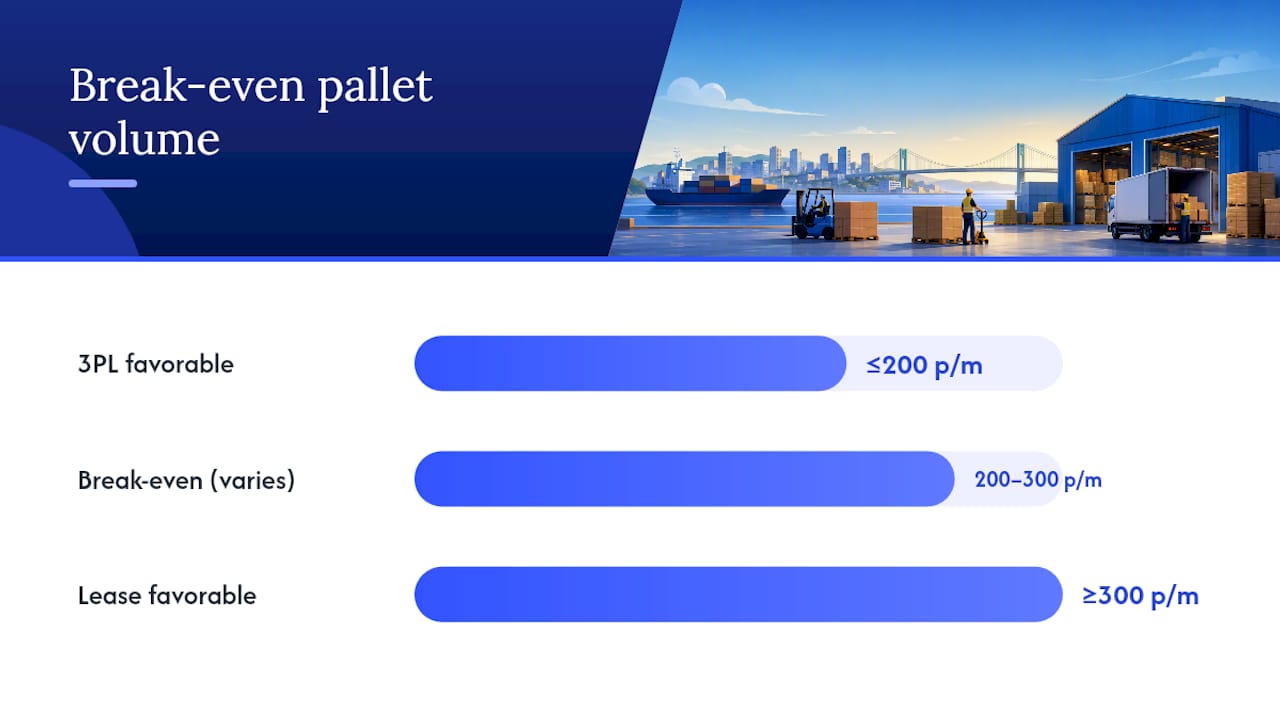
A 3PL per-pallet model suits variable or seasonal demand; a direct lease pays off above roughly 200–300 steady pallet positions per month. |
| Getitpicked for last-mile integration |
Getitpicked connects Halifax warehouse releases to same-day delivery across Nova Scotia with no long-term contract required. |
Table of Contents
What warehousing options are available in Halifax?
Halifax’s third-party logistics market covers a wider range of services than most Atlantic Canadian cities. Here is what you can source locally, and when each service matters operationally.
- Container destuffing / transloading: Unloading ocean containers and transferring freight to domestic trailers or pallet racking. Labor-intensive and time-sensitive; providers near the Port of Halifax reduce drayage cost and demurrage risk. Local providers publish sample rates for cross-docking and container destuffing, typically structured as per-pallet or flat-fee charges.
- Cross-docking: Freight arrives, gets sorted, and departs the same day with no long-term storage. Ideal for consolidating LTL shipments or redistributing full container loads across Atlantic Canada. Getitpicked’s cross-dock service handles pallet-level sorting and province-wide transport.
- Order picking / pick & pack: Picking individual SKUs and packing them for e-commerce or retail replenishment. Labor-intensive; look for providers with WMS-driven slotting and barcode scanning to keep error rates low.
- Inventory management (WMS): Real-time warehouse management system access via a customer portal. Some Halifax providers offer live inventory tracking and 24/7 portal access, which reduces the need for manual stock checks and speeds up order confirmation.
- Bonded storage / CBSA-capable: Goods held under customs bond before duties are paid. Required for many ocean imports through the Port of Halifax. Providers must be registered with the Canada Border Services Agency; confirm bonded status before signing any agreement.
- E-commerce fulfillment: Receiving purchase orders from Shopify, WooCommerce, or marketplace platforms, picking and packing, and handing off to a last-mile carrier. Integration with courier APIs matters here.
- Reverse logistics: Processing customer returns, inspecting, restocking, or disposing of goods. Getitpicked handles reverse logistics across Nova Scotia, which is useful for e-commerce businesses managing return volumes.
- Temperature-controlled storage: Refrigerated or frozen zones for food, pharma, or specialty products. Not all Halifax facilities offer this; confirm zone temperatures and backup power before committing.
- Pallet and bulk storage: Standard racked pallet positions or floor-stacked bulk storage. Pallet delivery service options in Halifax connect warehouse pallet releases directly to local and regional delivery runs.
One compliance note: businesses importing goods via Halifax must follow CFIA wood packaging rules for any wooden pallets or crating arriving from international origins. The CFIA publishes import requirements for wood packaging materials, and non-compliant shipments can be held at the port. Confirm your provider understands these rules before your first container arrives.
Which facility specs and Halifax locations matter most?
Location inside Halifax is not a minor detail. A facility two kilometers closer to the port can save meaningful drayage cost per container move, and the wrong clear height can make your racking plan impossible.
Facility features to prioritize
- Clear height: 18’ is common in older Halifax stock; 24’–28’ is available in newer builds and allows higher-density racking. Confirm usable height, not just peak height.
- Dock doors and drive-ins: Dock-level doors for trailer loading; drive-in doors for container or van access. A sample airport-adjacent listing at 667 Barnes Road shows three dock-level doors and eight drive-ins across 29,074 sq ft with an 18’ clear height, which is a useful benchmark for mid-size operations.
- Floor loading capacity: Critical for heavy goods or high-density racking. Ask for the rated floor load in pounds per square foot.
- Cold storage: Dedicated refrigerated or frozen zones with independent temperature monitoring and backup power.
- Security and fire protection: CCTV, access control, sprinkler systems, and monitored alarms. These also affect your cargo insurance premiums.
- Bonded / non-bonded status: Bonded facilities are registered with CBSA and can hold dutiable goods. Non-bonded facilities cannot.
- Forklift and heavy-lift capacity: Confirm the provider’s equipment matches your pallet weight and load configuration.
Location priorities in Halifax
Port of Halifax / Halterm / Fairview Cove terminals: Port-adjacent space cuts drayage cost and reduces the window for demurrage charges. For ocean-import-heavy supply chains, this is the highest-priority location factor.
CN Rail intermodal ramp: CN operates an intermodal terminal at the port, connecting Halifax to Montreal, Toronto, and western Canada. Proximity to the ramp matters if you move rail containers inland.
Burnside Industrial Park and Halifax Logistics Park: Burnside is Atlantic Canada’s largest industrial park, and Halifax Logistics Park is positioned specifically for multi-modal transload and logistics operations with direct highway, port, and airport access. Both are the default starting point for most logistics tenants.
Halifax Stanfield International Airport: Airport-adjacent sites suit time-sensitive air freight, pharma, and e-commerce operations. Airport delivery workflows from warehouse to final destination run faster when the facility sits within a short drive of the terminal.
Highway 102 and 100-series highways: Direct highway access reduces transit time to Truro, Dartmouth, and points across Nova Scotia and New Brunswick.
Cost advantage: Halifax and Nova Scotia warehouse rents average $7–$9 per square foot per year, well below Greater Toronto Area and British Columbia rates, which commonly run $12–$13+ per square foot. For businesses with North Atlantic or European trade lanes, Halifax’s port proximity compounds that cost advantage.
How is warehousing cost calculated in Halifax?
Warehousing cost in Halifax follows a few standard pricing models. Understanding the structure before you receive a quote prevents surprises on your first invoice.
Common pricing components:
- Net rent ($/sqft/yr): The base lease rate for dedicated space. At $7–$9/sqft/yr locally, a 10,000 sq ft space runs roughly $70,000–$90,000 per year before additional rent.
- Additional rent (operating costs): Property taxes, insurance, maintenance, and utilities added on top of net rent. Budget an additional $3–$6/sqft/yr in most Halifax industrial leases.
- Per-pallet storage fee: Common in 3PL arrangements. One local operator publishes a rate of $2 per pallet per day for storage, with cross-docking priced at $12 per pallet for LTL and $225 flat for FTL moves.
- Receiving / inbound handling: A per-pallet or per-container fee charged when freight arrives and is put away.
- Pick fees: Per-pick or per-order charges for order fulfillment. These add up quickly on high-SKU, low-unit-per-order e-commerce profiles.
- Monthly minimums: Most 3PL providers set a floor charge regardless of volume. Know the minimum before you sign.
- Temperature-control premiums: Cold or frozen zones carry higher operating costs, typically passed through as a surcharge per pallet position.
- HST: Warehousing services in Nova Scotia are subject to the 15% Harmonized Sales Tax. Factor this into your landed cost model.
3PL vs. lease: a simple comparison
A 3PL per-pallet model works well when your volume is below roughly 200–300 pallet positions per month or when demand is seasonal. Above that threshold, or when you need dedicated staff and branded space, a direct lease often delivers a lower per-unit cost. The break-even point shifts depending on your pick complexity and how much value-added labor the 3PL includes.
Pro Tip: When negotiating a multi-year industrial lease in Halifax, ask specifically about tenant improvement allowances and free-rent periods. New-build projects like Bayers Lake Industrial Centre offer tiered cash-back incentives tied to square footage bands, which can offset fit-out costs significantly in the first year.
How do you choose the right warehousing partner in Halifax?
A structured evaluation process saves time and prevents costly mismatches. Here is a practical sequence from requirement definition to onboarding.
- Define your requirements (Week 1): Document monthly pallet volume, inbound modes, SKU count, order profile, temperature needs, and any CBSA or bonded requirements. This single document drives every RFP response you receive.
- Issue a short RFP (Week 1–2): Send to three to five local providers. Ask for a rate card, a facility spec sheet, a sample WMS screenshot, and two client references in a similar category.
- Conduct site visits (Week 2–3): Walk the facility during operating hours. Check dock door count vs. your inbound frequency, racking configuration, security systems, and cold storage zones if needed.
- Run a pilot (Week 4–8): Start with one inbound container or one month of pallet storage before committing to a full contract. A reputable provider will accommodate a pilot.
- Onboard formally (Week 8+): Agree on labeling standards, ASN (advance shipping notice) cadence, pallet configuration specs, and WMS login credentials before your first full shipment.
Key questions to ask every provider:
- Are you CBSA-registered and bonded? Can you show your bonded warehouse certificate?
- What WMS platform do you use, and does it offer API or EDI integration?
- What are your operating hours, and what is your SLA for same-day order release?
- What safety certifications does your facility hold?
- How do you handle demurrage and container detention charges?
- What is your liability cap and claims process for damaged or lost goods?
- Can you provide two references from clients with similar volumes and commodity types?
Red flags to watch for:
- No CBSA bonded status for a provider marketing import services
- Inventory tracked on spreadsheets with no live WMS access
- Vague or absent SLAs for order release and receiving turnaround
- No documented demurrage or detention handling process
- Missing sprinkler systems or monitored security in the facility
- Unwillingness to provide client references or a facility tour
Trust signals worth verifying: a live WMS demo (not just a screenshot), a copy of the CBSA bonded warehouse registration, at least two years of operation in Halifax, and documented handling of ocean-import or e-commerce volumes comparable to yours.
Where can you find leaseable warehouse space in Halifax?
Halifax’s industrial real estate market has distinct clusters, each suited to different operational profiles.
Burnside Industrial Park (Dartmouth): Atlantic Canada’s largest industrial park, with direct access to Highway 111, the Dartmouth Connector, and proximity to the port. Burnside suits high-throughput transload, distribution, and manufacturing operations. Large contiguous spaces are available, and the park hosts a mix of owner-occupied and multi-tenant buildings.
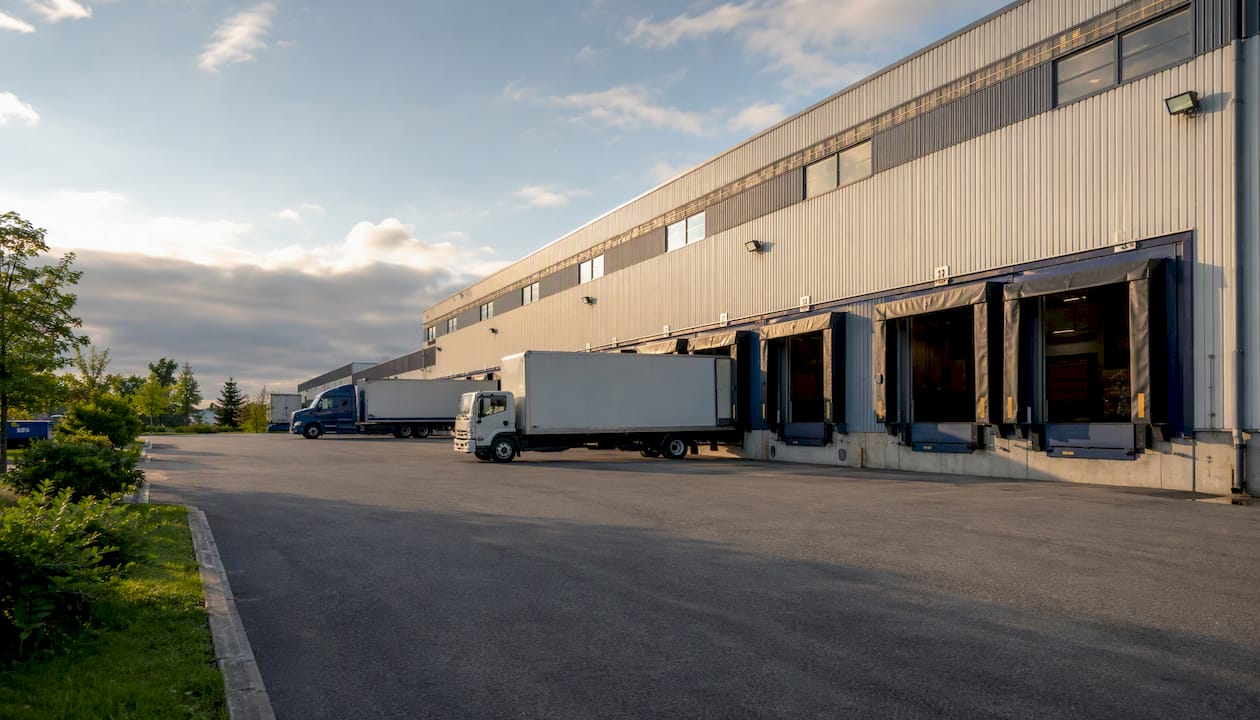
Halifax Logistics Park: Positioned specifically for multi-modal logistics with direct access to port, rail, highway, and airport infrastructure. The park is the preferred location for businesses running regular container moves through the Port of Halifax.
Bayers Lake Industrial Centre: A newer development offering 15,000–400,000 sq ft for lease in zero-carbon-certified buildings with tiered tenant incentive programs. The zero-carbon certification matters for businesses with sustainability reporting requirements or ESG commitments. Incentive tiers are structured by square footage band, so larger leases attract proportionally higher cash-back amounts.
Airport-adjacent properties (e.g., 667 Barnes Road): The 667 Barnes Road listing illustrates what mid-size airport-adjacent space looks like: 29,074 sq ft, 18’ clear height, three dock-level doors, eight drive-ins, a dedicated cold storage unit, and proximity to Halifax Stanfield International Airport. This profile suits pharma, perishables, or time-sensitive e-commerce operations.
Typical specs to request in any listing:
- Total square footage and clear height (usable, not peak)
- Dock door count and drive-in count
- Floor load rating (lbs/sqft)
- Cold storage zone presence and temperature range
- Truck court depth and trailer parking count
- Net rent and estimated additional rent per square foot
- Lease term and any tenant improvement or free-rent incentives
Local lease context: Nova Scotia dedicated warehouse space averages $7–$9/sqft/yr net, making it one of the most cost-competitive industrial markets in Canada for logistics tenants. New-build zero-carbon projects at Bayers Lake carry a modest premium but offset it through energy savings and available tenant incentives.
Getitpicked connects Halifax warehousing to same-day last-mile delivery
Most warehousing providers in Halifax stop at the dock door. Getitpicked closes the gap between pallet release and final delivery across Nova Scotia, with no long-term contract required to get started.
Getitpicked offers on-demand same-day delivery across Nova Scotia, pallet storage, cross-docking, and 3PL services with real-time tracking, proof of delivery, and a customer portal. For Halifax businesses managing urgent transloads, short-term overflow capacity, or e-commerce order fulfillment, Getitpicked provides a single point of contact for warehousing and last-mile in one. You get enterprise last-mile capabilities without the overhead of a dedicated fleet or a multi-year 3PL contract. Request a quote, share your volume and inbound details, and Getitpicked can have your operation running within days.
What logistics managers often get wrong about Halifax warehousing
The most common mistake is treating the warehousing decision as purely a real estate question. The facility matters, but the operational handoff between storage and delivery is where most supply chains lose time and money in Halifax.
New clients frequently arrive with labeling standards that do not match the warehouse’s WMS, pallet configurations that require manual restacking before putaway, and ASN cadences that lag actual container arrivals by 24–48 hours. Each of those gaps adds cost and delay that never shows up in the rate card.
The fix is straightforward: before your first shipment, align on three things with your provider. First, confirm your label format matches the WMS scan requirements. Second, agree on a pallet configuration standard (height, weight, wrap spec) so no restacking is needed on arrival. Third, set an ASN lead time that gives the warehouse enough notice to pre-slot your inbound freight.
For e-commerce operations, pre-kitting high-velocity SKUs before they enter the warehouse cuts pick time significantly. Most Halifax 3PLs will accommodate this with a modest setup fee.
Pro Tip: When starting a pilot with a Halifax warehousing partner, run your first two inbound containers manually alongside the WMS rather than relying on the system alone. This surfaces any mapping errors before they affect live orders.
Sources
Recommended