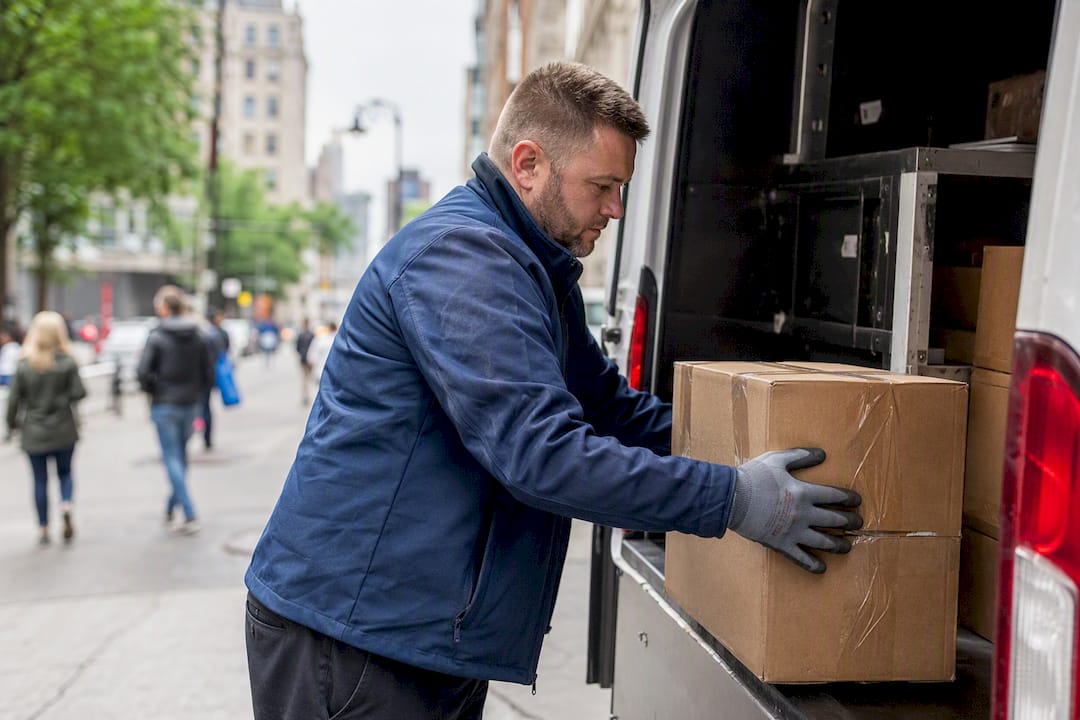
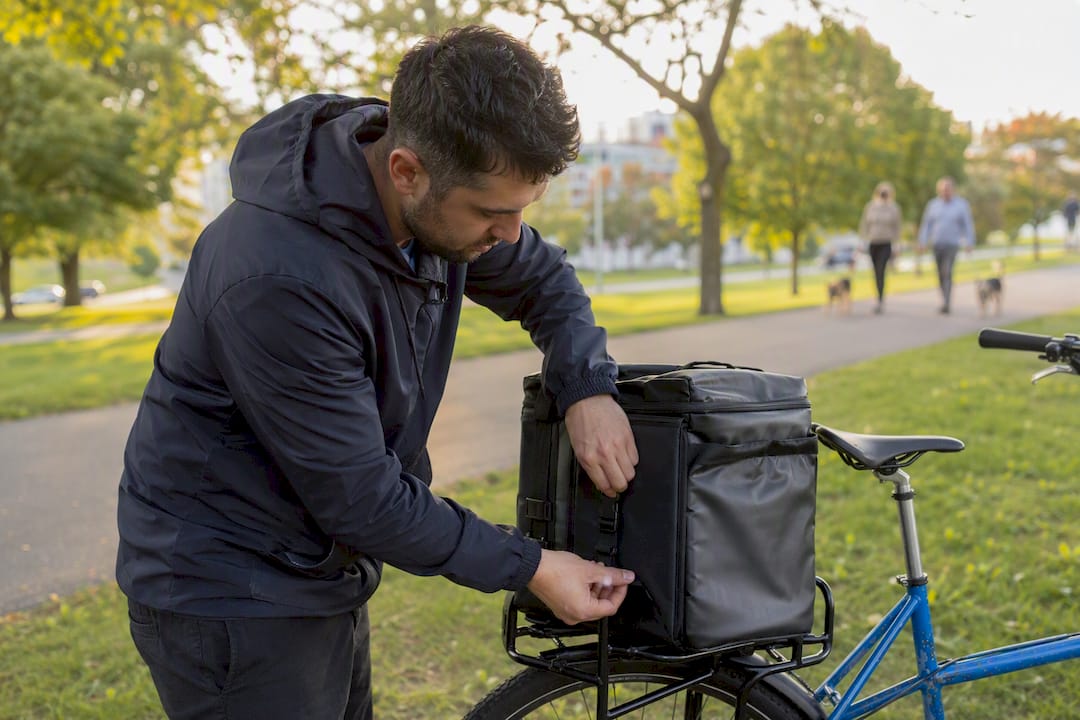
Rush hotshot courier deliveries typically arrive within about half an hour to an hour and a half when a driver is nearby, while standard same-day bookings usually complete within a few hours. Exact timing shifts with distance, traffic, and how many drivers are working nearby at the moment you book. Get It Picked runs both tiers through its app, so if you need something moved today, that’s your direct answer.
TL;DR:
- Hotshot or rush deliveries can arrive within 30 minutes to an hour and a half, but only if a driver is nearby and traffic conditions are favorable.
- Scheduled same-day services are best for non-urgent but time-sensitive deliveries, booked hours in advance to optimize routing and driver availability.
- Clear, detailed pickup and drop-off instructions significantly reduce delays caused by driver confusion or on-site on-site issues.
- Booking at least 30 to 60 minutes ahead with precise address details improves ETA accuracy and helps the platform pre-assign drivers during busy periods.
- Severe weather and low population density areas naturally extend delivery times, so building buffers into scheduling is essential during stormy seasons or in rural regions.
Table of Contents
Courier Delivery Times by Service Tier
Every on-demand courier platform runs on two basic speeds, and knowing which one you need saves you money and stress.
Hotshot or rush delivery is built for genuine emergencies: a contract that must reach a client’s desk quickly, a part a mechanic needs before the shop closes, or a document with a tight filing deadline. Drivers get dispatched immediately, and same-day hotshot services can complete a delivery within about an hour when a driver is near.
Standard same-day delivery covers everything less urgent but still time-sensitive: a batch of invoices, a grocery run, furniture moving across town. These jobs get scheduled into a driver’s route rather than triggering an immediate dispatch, which keeps costs down while still guaranteeing same-day completion.
Here’s roughly what each tier looks like in practice:
- Hotshot/rush: about half an hour to an hour and a half, priced at a premium, best for true emergencies
- Standard same-day: generally a few hours, most common choice for businesses and errands
- Scheduled same-day: booked hours ahead for a guaranteed window, ideal for recurring pickups
The speed advantage comes down to routing. Traditional carriers rely on hub-and-spoke networks, sending your parcel to a sorting depot before it goes back out for delivery. Local app-based couriers skip that step entirely and drive point-to-point instead, which is why an on-demand courier can outrun a national carrier’s overnight service for anything within its coverage area. You can see how this plays out for same-day delivery across a metro area.
What Actually Slows Down or Speeds Up a Delivery
Not every delay is bad luck. Most of them come from a short list of predictable causes, and half of them are things you can control before you even tap “book.”
- Distance and route complexity. A five-mile trip across a grid-pattern downtown moves faster than the same five miles through a suburb with one bridge in and out.
- Time of day and traffic. Rush hour, lunch rush near restaurant districts, and event traffic near stadiums or convention centers all stretch ETAs, sometimes by 20 minutes or more.
- Driver supply and surge periods. Friday afternoons, the week before major holidays, and severe-weather days pull more requests into the system at once, thinning out available drivers.
- Scheduled vs. immediate dispatch. A job booked for “right now” competes with everyone else booking right now. A job scheduled 30 to 60 minutes ahead lets the platform line up a driver in advance.
- On-site delays from unclear instructions. A driver who can’t find the loading dock, doesn’t have a gate code, or has to call you to ask which door to use loses minutes that add up fast.
That last point matters more than most people expect. Vague pickup instructions and driver phone calls to clarify details are among the most common causes of last-mile holdups, and they’re entirely preventable.
Pro Tip: Write your pickup and drop-off instructions like you’re giving them to someone who has never been to your building. Include the door, the floor, the buzzer code, and a name to ask for. It sounds excessive until you realize it cuts several minutes off nearly every job.
How to Book for the Fastest Possible Pickup
Booking speed and delivery speed are not the same thing, but the way you book directly shapes how fast your item actually moves.
Start by picking the right tier and being upfront about your deadline. If you genuinely need a 45-minute turnaround, say so and choose hotshot. Booking standard same-day and hoping it moves faster than promised only sets you up for disappointment.
Next, use a ready time whenever you can rather than demanding an instant pickup the second you submit the request. Courier platforms use routing and driver-clustering algorithms to keep availability high, and giving the system 30 to 60 minutes of lead time lets it pre-allocate a driver instead of scrambling to find one on the spot. This one habit does more to protect your ETA during busy periods than almost anything else.
From there:
- Enter precise pickup and drop-off addresses, including unit numbers, gate codes, and a contact name.
- Note any contact-free handling instructions if no one will be present to hand off the item.
- Have the package sealed, labeled, and sitting by the door before the driver is scheduled to arrive.
- Request photo-based proof of delivery for anything sensitive, valuable, or time-critical.
- If you book often, set up an account or connect through an API instead of re-entering details every time.
App-based booking already cuts most of the admin work that phone-based dispatch requires: instant quotes, immediate driver assignment, and live tracking replace the back-and-forth of calling a dispatcher and waiting on hold. The Get It Picked app builds all of this into one screen, so the booking step stops being the bottleneck.
Pro Tip: If you send the same type of delivery regularly (legal documents, auto parts, lunch orders) save the pickup and drop-off details as a template in your account. It removes almost all the manual entry and the confirmation calls that eat into your ETA.
What Happens Between Booking and Delivery
Once you confirm a job, the process follows a predictable sequence: driver assigned, then en route to pickup, then arrived, then delivered. Watching that sequence tells you whether your delivery is on track or worth a second look.
Real-time GPS tracking updates your ETA continuously, which means the number you see at booking is a starting estimate, not a promise. A shift of five or ten minutes is normal and not worth worrying about. If the ETA jumps by 20 minutes or more, or the driver’s location stalls for a while, that’s your signal to check in through the app rather than wait it out.
- Driver assigned: confirms a driver has accepted your job and is heading your way
- En route to pickup: live map tracking shows real-time position and updated arrival estimate
- Arrived and picked up: the clock resets to your delivery-side ETA
- Delivered: confirmed with photo-based electronic proof of delivery (ePOD)
That last step deserves attention. A timestamped photo of the item at the drop-off location is the most reliable record you can have if a delivery is ever questioned, whether that’s a client asking whether a contract arrived on time or a business reconciling its own logs. For anything audit-sensitive, a photo ePOD resolves disputes in minutes instead of days of back-and-forth.
If your ETA looks at risk, most platforms let you message the driver directly or flag the job to support before it becomes a real problem. Catching it early beats calling after the deadline has already passed.
Workflows That Keep Delivery Times Predictable for Businesses
Individual bookings can tolerate a little variability. Businesses that ship every day cannot, and that’s where a few operational habits make the difference between “usually fast” and “reliably fast.”
- Integrate through an API. Removing the manual booking step for recurring shipments cuts admin time and speeds up dispatch, since the request hits the platform the moment your internal system generates it instead of waiting for someone to open an app.
- Batch recurring pickups. If you send five packages to the same district every afternoon, a scheduled window beats five separate on-demand requests competing for drivers at the same moment.
- Standardize your delivery templates. Lock in recipient names, access instructions, and preferred drop locations once, so every driver gets the same clear information without a phone call.
- Build ePOD requirements into your SLA. If you’re contracting delivery for medical supplies, legal filings, or high-value parts, specify photo proof and a delivery window upfront rather than negotiating it after something goes wrong.
Law firms are a good example of why this matters. A firm sending a signed contract across town at 4:45 p.m. can’t afford a driver calling to ask which floor the recipient is on. Locking that detail into a dedicated courier account for law firms removes the guesswork entirely, and it’s the same principle behind Get It Picked’s broader business courier accounts.
Does Weather Actually Change Your Delivery Time?
Yes, and it’s one of the few delay factors almost no booking tactic can fully offset. Heavy rain, snow, and ice slow driving speeds, reduce visibility, and often shrink the pool of available drivers as some choose not to work in severe conditions.
During a snowstorm or major weather event, expect standard same-day windows to stretch from a typical 2 to 4 hours toward the outer edge of that range, or beyond it on the worst days. Hotshot service becomes harder to guarantee on short notice because fewer drivers are actively working, and the ones who are face slower roads.
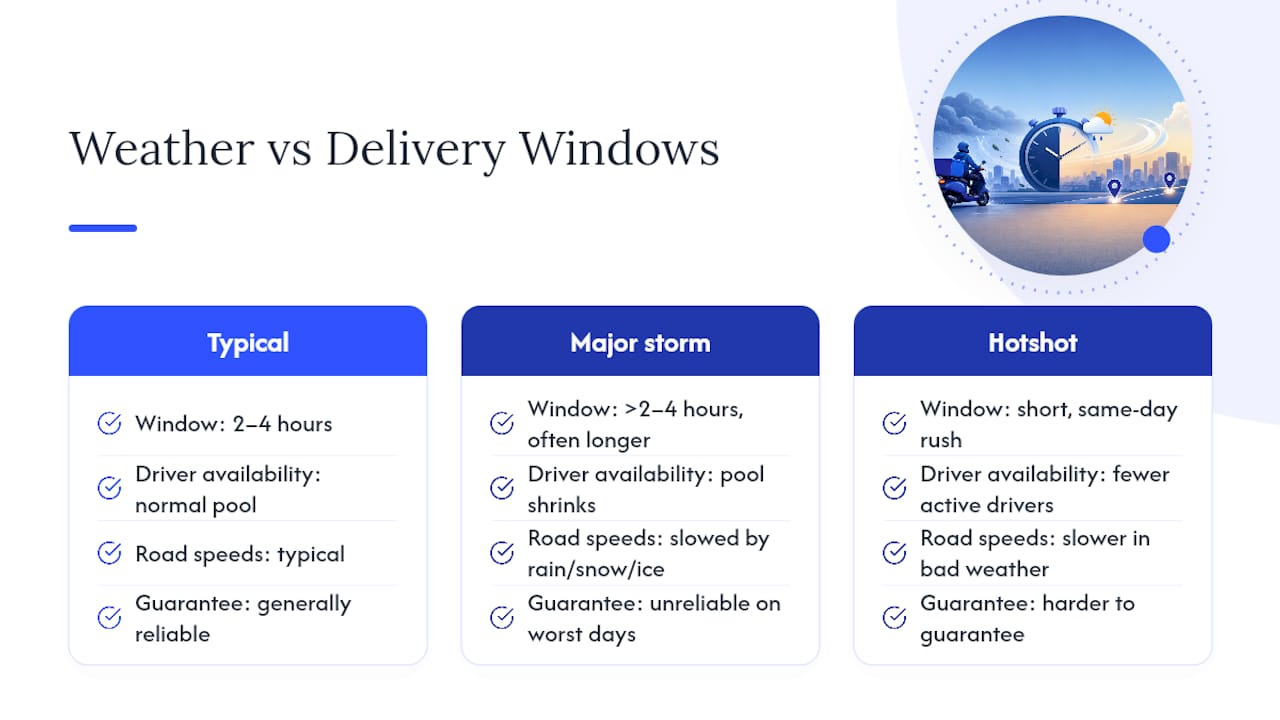
The practical response is to build in a buffer. If a delivery has to happen on a day with a storm warning, book earlier than you normally would and lean toward standard same-day with a wider window rather than betting on a rush tier that assumes ideal driving conditions. Booking your ready time an hour or two ahead, rather than the moment you need the pickup, gives the platform room to line up a driver despite thinner availability. Businesses that ship daily should treat seasonal weather patterns (winter storms, spring flooding in low-lying routes, high summer heat that stresses vehicles) as a recurring planning variable, not a surprise each time.
Urban vs. Rural: Why Location Changes Everything
Delivery speed tracks population density almost as closely as it tracks distance. A courier working a dense downtown core can complete more stops per hour because pickup and drop-off points sit closer together and driver supply tends to be thicker.
Move into a suburb, and average delivery times stretch slightly since stops are more spread out and there are fewer drivers per square mile actively working at any given moment. Push further out into a rural area, and the math shifts again: a single delivery might mean 20 or 30 minutes of driving each way with no other stops to combine along the route, which naturally pushes it toward the standard same-day tier rather than a fast hotshot window.
This doesn’t mean rural deliveries are unreliable. It means the ETA band you should expect is wider by design, and a rush request in a low-density area may simply take longer to fulfill because there’s no driver already circling nearby. If you regularly ship between a city center and an outlying area, it helps to build that extra travel time into your own planning rather than treating the urban ETA as the default everywhere.
Package Size, Weight, and Their Effect on Speed
Most on-demand couriers use standard passenger or light commercial vehicles, which means a small envelope and a mid-size box usually move at the same speed; the vehicle isn’t the bottleneck, the route is.
Where size and weight start to matter is at the extremes. Furniture, large appliances, or anything requiring two people to lift changes the type of vehicle and driver needed, which can add time to the dispatch step since fewer vehicles in the fleet are equipped for oversized loads. The same applies to unusually heavy items that need a larger vehicle rather than a standard courier car.
For anything outside a typical parcel (a couch, a pallet, several boxes at once) it’s worth flagging the size and weight when booking rather than after a driver already shows up expecting a small package. Getting that detail right upfront, sometimes with help from a professional packing service for oversized or fragile items, means the platform assigns the correct vehicle the first time instead of losing time to a second dispatch.
Holidays, Surges, and Other Exceptions
Even the fastest courier network has days when normal ETA bands don’t apply, and knowing which ones matters more than most booking guides admit.
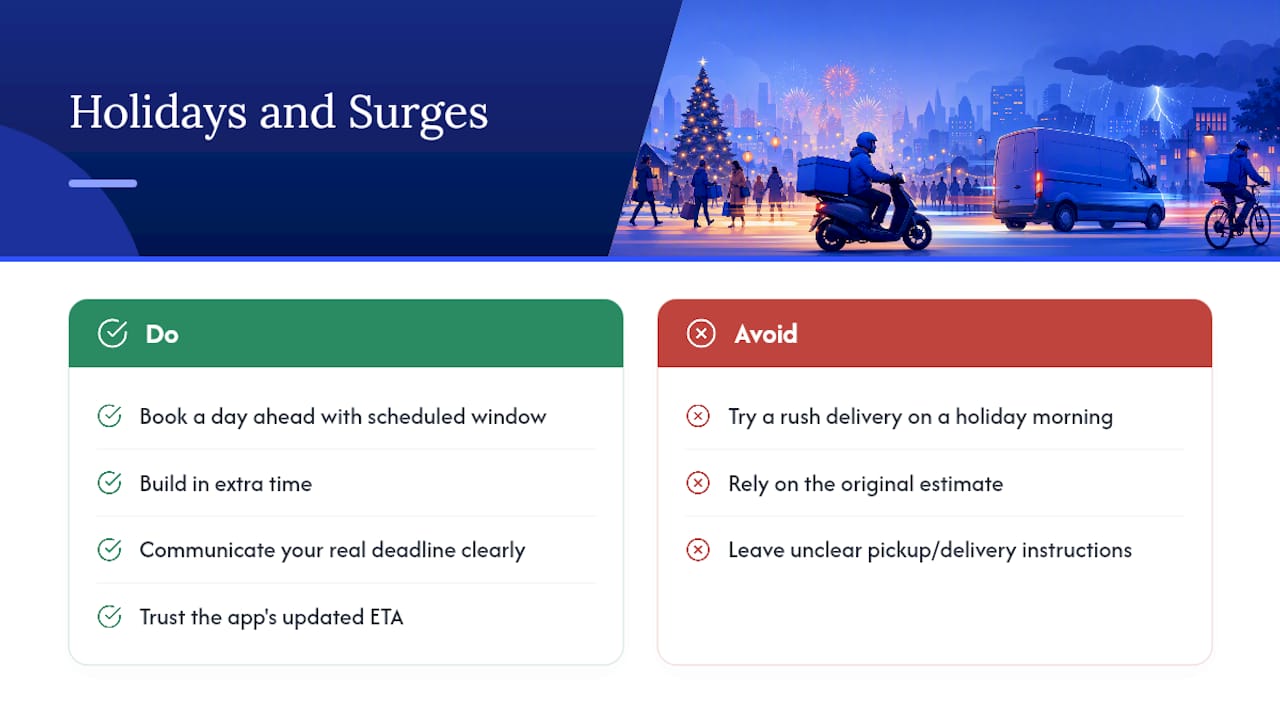
Statutory holidays are the most predictable exception. Driver availability drops because fewer people are working, so standard same-day windows often widen and hotshot requests may take longer to fill even though the service itself doesn’t shut down. Booking a day ahead with a scheduled window is almost always smarter than trying to book a rush delivery on a holiday morning.
Unexpected events cause the same effect on shorter notice: a major storm, a large public event closing downtown streets, or a regional emergency can all thin out available drivers within minutes. Reputable platforms handle this by extending ETAs transparently in the app rather than accepting bookings they can’t fulfill, and by prioritizing dispatch based on who booked earliest with the clearest instructions.
The takeaway for anyone booking during an exception period is simple: build in extra time, communicate your real deadline clearly, and treat the app’s updated ETA as the number to trust over whatever the original estimate said.
Get It Picked’s Perspective on Delivery Times
Our dispatch runs on app-based routing and driver clustering, which is why we can offer rush windows as tight as an hour in dense areas while keeping standard same-day reliable everywhere else. Law firms send signed contracts through us because a missed filing deadline isn’t an option. Auto shops and pharmacies use us because a part or a prescription sitting in transit costs someone real time. Every job carries GPS tracking and photo ePOD, so you always know where your item is and exactly when it landed.
— Agamjot
Book a Rush or Same-Day Pickup in Three Steps
If you need something moved today, the tier you pick and the details you provide determine how close you land to the fast end of the ETA range. Get It Picked runs both hotshot and standard same-day through one app, with GPS tracking and photo ePOD on every job, so you’re never guessing where your delivery stands.
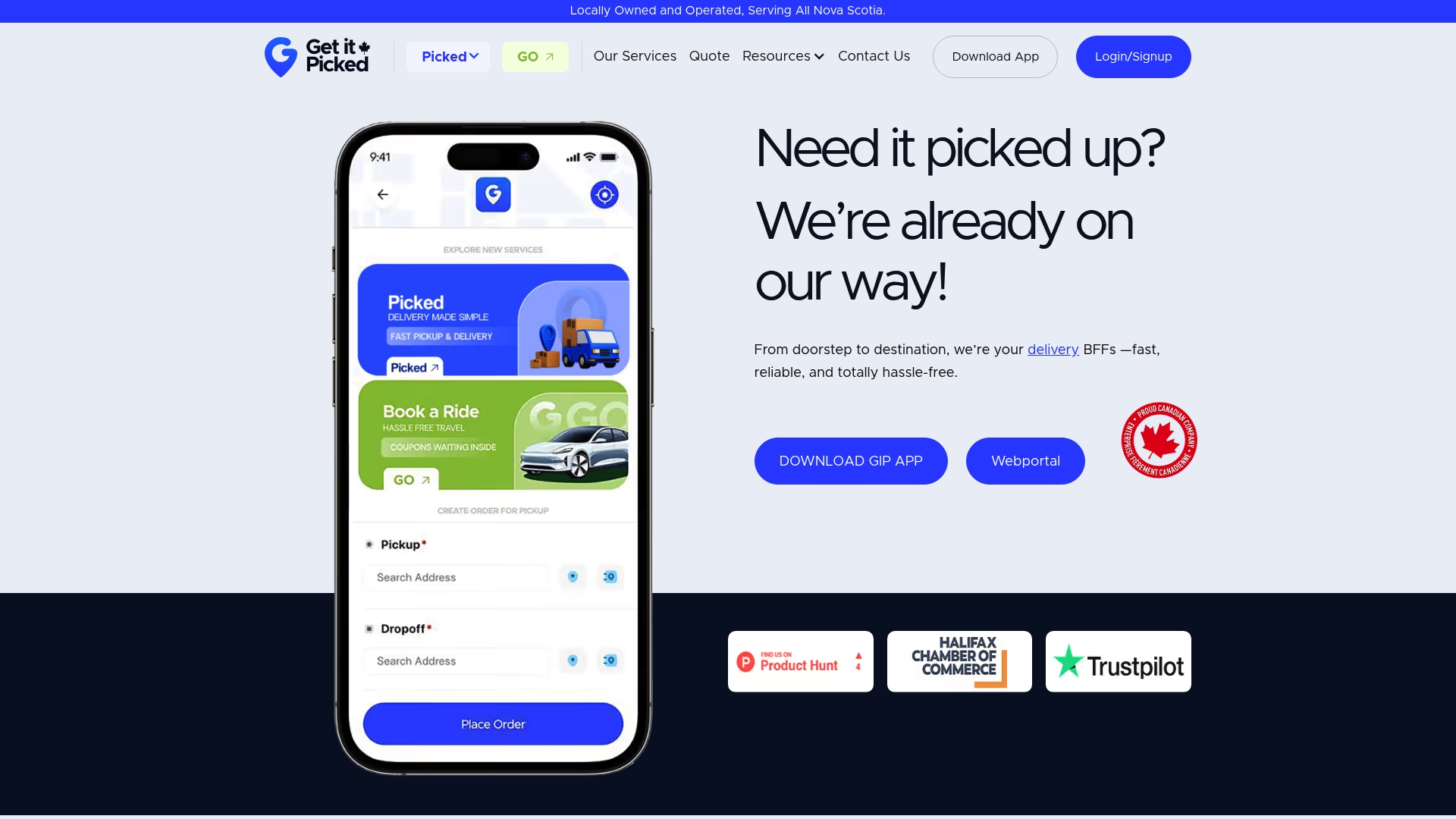
Getting a delivery moving takes three steps. Open the app and choose your service, select hotshot for a hard deadline or standard same-day for everything else, then enter your pickup and drop-off instructions and confirm. For businesses shipping regularly, whether that’s parts, documents, or e-commerce orders, the same-day delivery service page covers account setup and integration options that cut booking time down even further. Download the app, book your first rush pickup, and see your driver’s live ETA the moment it’s assigned.
Sources
Recommended