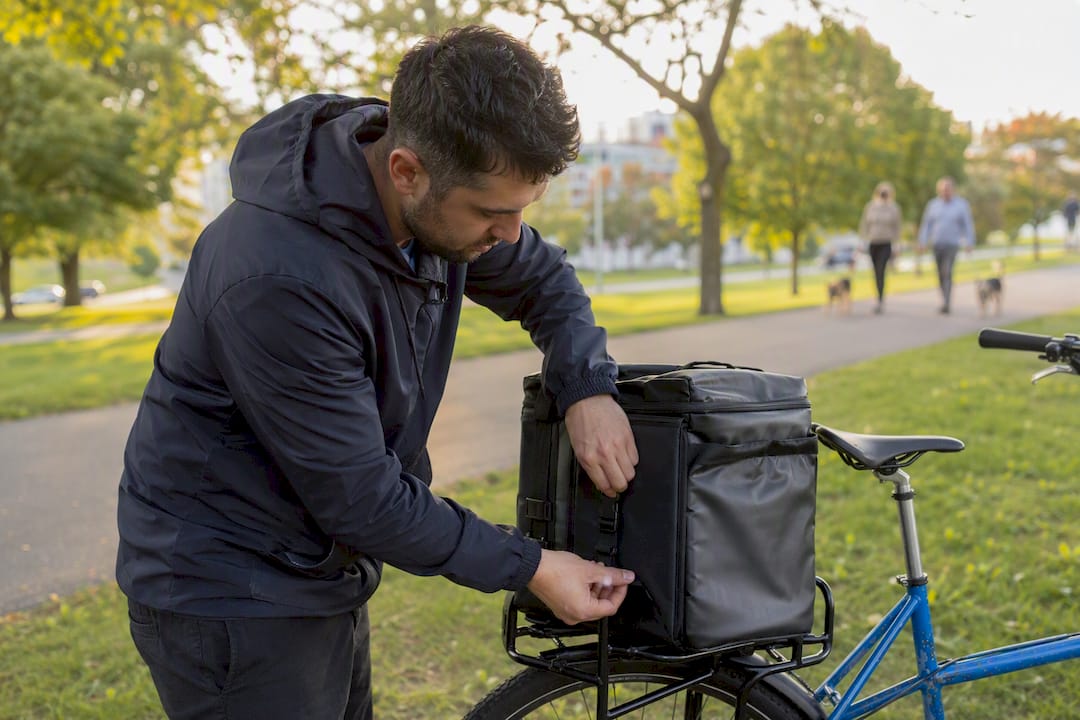
The fastest way to move a part across Halifax today is an on-demand same-day courier, booked through an app or a phone call. Get It Picked operates in this space locally, with real-time tracking that lets a shop confirm a pickup the moment it happens. Open the app, request a driver, and a part that was sitting on a shelf in Dartmouth can be on a lift in Bedford before the customer finishes their coffee.
Table of Contents
What Same-Day Auto Parts Delivery Actually Covers
Same-day auto parts delivery is a courier picking up a part from a supplier, warehouse, or another shop and getting it to where it needs to go within hours, not days. It is distinct from freight shipping or a parts store’s own delivery van, which usually runs on a fixed route and schedule. A courier dispatches on demand, which matters when a repair is stalled and the clock is running.
This model fits a specific set of situations. A shop mid-repair discovers the part on hand is wrong and needs the correct one from across town before the bay opens up for the next job. A fleet manager needs a brake caliper moved between two locations without pulling a technician off the floor to drive it. A DIY owner tracked down a hard-to-find part at a specialty supplier and just needs it delivered rather than making the trip themselves.
Coverage matters as much as speed. In Halifax, that means:
Knowing a courier services your exact postal code before an emergency hits saves time when you actually need it.
How Do You Book an Urgent Auto Parts Pickup?
Booking speed depends on giving dispatch clean information the first time. A back-and-forth over missing details is where most delays actually happen, not the driving itself.
Most requests move faster through the app, since it captures addresses and contact details in one pass. A phone call still makes sense for complex jobs, like a multi-stop run or a delivery requiring special equipment.
Coordinating with the parts counter ahead of the pickup shortens the whole run. Call ahead so the part is boxed and waiting at the counter, confirm who’s covering payment, and pass along any arrival instructions, like a specific loading dock or after-hours entry code.
Pro Tip: Save your shop’s standard pickup and delivery addresses in the app’s favorites. It cuts booking time down to under a minute for repeat runs.
How Fast Is Same-Day, and What Drives the Price?
“Same-day” isn’t one speed. It typically breaks into three tiers, and knowing which one you need before you book keeps you from overpaying or underestimating the wait.
Cost moves with a handful of predictable factors: distance between pickup and drop-off, how urgent the request is, the size and weight of the part, whether it needs special handling, and how many stops are on the route. A single alternator run across Halifax costs less than a multi-stop pickup involving a transmission and a set of tires bound for two different shops.
Guaranteed windows exist, but they usually carry a premium. Carriers offering committed delivery times reduce the risk of a shop eating downtime costs, and that reliability is often worth paying for when a bay is sitting idle waiting on a single missing part. If a delay would cost more than the rush fee, ask for the guarantee.
The broader case for fast parts logistics is straightforward: Canada’s automotive aftermarket includes more than 23,000 repair and maintenance facilities, all competing for the same pool of technicians and bay time. Parts sitting in transit instead of on a lift is lost revenue, multiplied across an entire industry.
Packing an Auto Part So It Survives the Trip
Damage in transit turns a same-day win into a next-day headache, and most of it is preventable with basic packing discipline.
Small fragile parts like sensors, mirrors, or electronic modules need padded boxes with enough cushioning that nothing shifts during handling, as explained in this guide on how to move fragile items safely. Heavy components such as alternators or brake rotors should sit in sturdy containers with reinforced bottoms so the box doesn’t fail under its own weight. Odd-shaped items like exhaust sections or bumpers often travel better unboxed but wrapped and clearly tagged. Batteries and fluids fall under hazardous materials handling rules in Canada, so flag these at booking rather than assuming a driver will spot them.
Label everything clearly: part number or SKU, the shop’s order number, and a contact name and phone number. A part with no paperwork is a part a driver can’t confirm at drop-off.
If a part needs a liftgate, a pallet jack, or two people to move safely, say so when you book. Proper handling and documentation are exactly what industry packaging guidance points to as the difference between a clean delivery and a damage claim.
Pro Tip: Photograph the part before it leaves your counter. If a damage dispute ever comes up, that photo settles it in seconds.
What Should You Confirm Before You Book a Courier?
A quick checklist before you commit to a courier saves you from discovering gaps mid-emergency.
Running through this once, before you’re in a crunch, means you’re not vetting a courier for the first time while a bay sits empty.
How Get It Picked Handles Urgent Auto Parts Runs in Halifax
Get It Picked was built around exactly this kind of urgency. Booking happens through the mobile app in a couple of minutes, with real-time tracking so you can watch the pickup happen and confirm delivery without a phone call to check status.
The features that matter for parts runs are the ones built into the service by default: proof of pickup and delivery for every job, drivers who handle the kind of loads auto parts actually require, and coverage across Halifax Regional Municipality with Nova Scotia reach and New Brunswick service where the run calls for it. Shops that need this regularly, not just occasionally, can set up a business account for recurring runs, rather than booking each one from scratch. Individual owners who just need one part moved can do the same thing through the same-day delivery service. If your shop moves parts often enough that a courier relationship makes sense, that’s the page to start on.
An Operator’s View on What Fast Parts Delivery Actually Changes
Shops don’t lose money because a part is expensive. They lose money because a bay sits empty while someone waits for that part to show up. A delivery that lands in under an hour instead of the next morning is the difference between finishing three jobs in a day instead of two, and that math compounds fast across a busy week.
The shops that treat courier relationships as part of their operation, not a backup plan for emergencies, tend to run tighter schedules and keep customers who don’t want to hear “come back tomorrow.” Speed becomes part of the pitch to the customer standing at the counter, not just a logistics detail happening behind the scenes.
If your shop hasn’t tested a same-day run yet, the next urgent part is a good place to start.